In this article 10 sections
- Water that cannot drain is the water that freezes
- Look for water standing in the gutter after rain
- Check the joints and the downpipe
- Look at the wall and the ground under the gutter
- Check flat roofs and roof outlets for plants, silt and standing water
- Clear the gullies and drains at the foot of the wall
- Check the brackets and any sagging runs
- Look at the outlets, hoppers and overflow pipes
- Keep a dated record
- Questions about frost and gutters
Temperatures are dropping and the first hard frosts are close. A blocked gutter overflows in rain, and when the temperature falls to freezing the overflow stays where it landed: on the wall, on the entrance and on the path below. This article sets out eight checks for the gutters, downpipes and drains of a commercial building, in the order we would do them.
Water that cannot drain is the water that freezes
Our rule before any frost is simple: get the water out of the gutters, downpipes and gullies. A clear system drains, and far less is left in it to freeze. A blocked one keeps water and silt in the channel, and a downpipe that is part full or a gully still holding water from the last rain does the same.
The physics supports it. Designing Buildings, a widely used construction reference, gives the expansion of water on freezing as around 9% by volume, and notes that damage builds with repeated freezing and thawing where a surface stays saturated. Most brick types are frost resistant when correctly installed, so the weak points are usually the places that stay wet: parapets and the upper reaches of a building, brickwork close to the ground, and any wall kept damp by a leak or a drainage fault. A gutter that overflows onto the same patch of wall every time it rains creates exactly that.
It helps to read a frost forecast correctly. The Met Office defines an air frost as the air temperature falling to or below freezing, usually measured at least one metre above the ground, and a ground frost as ice forming on surfaces that are below freezing, which can happen without an air frost. In practice, we would treat a wet path below a blocked gutter as a risk on any cold night, even when the forecast stays just above zero.
For the full method of clearing a gutter, see our article on neglected gutters and drains on commercial buildings.
Look for water standing in the gutter after rain
We start the inspection in the rain, not on a dry day. Walk the building during heavy rain if you can, and look along each run. Water should leave the gutter and reach the downpipe without ponding. Water that sits in the channel is the water that will freeze, and it usually points to a blocked outlet or a run that has lost its fall. Sometimes the outlet is simply too small for the roof it serves, a cause Cadw also names. Those need different fixes, so mark each place and note which one it looks like.
Wind and exposure can be the cause as well. In exposed places a gutter that falls against the prevailing wind can slow the water enough to spill over with no blockage at all, a point made in a Department for Communities (Northern Ireland) technical note on roof drainage. Cadw, the Welsh Government’s historic environment service, gives the same advice on walking the building in the rain, and also lists sagging and misalignment as a common problem with UPVC gutters.
Check the joints and the downpipe
A leaking joint should be repaired before the frost. Joints are a common place for a run to leak, and a leaking joint wets the same patch of wall every time it rains. Look for drips, streaks on the wall below and sealant that has cracked or pulled away. On the downpipe, check the brackets and the joints between sections, and watch whether water leaves the outlet freely in heavy rain. A pipe that runs dry in a downpour may be blocked higher up.
Do not only look at the pipe. Look at the wall beside it. Cadw points out that holes at the back of a downpipe can be hard to spot, particularly on rectangular pipes, and that the tell-tale signs appear on the wall: rust, water stains and washed-out masonry. It also warns that trapped water can freeze and split pipes, a warning it gives in its advice on cast iron, which it describes as durable when well maintained but brittle.
Look at the wall and the ground under the gutter
If we could fix one thing before a frost, it would be the overflow that lands on an entrance. Green or brown streaks on the wall point at an overflow. So does a stained patch of paving, or damp on the inside wall along the line of the gutter. Look above doors, steps, ramps and any path where people walk, because overflow that freezes there is a slip hazard.
HSE’s guidance on ice names building entrances, car parks, pedestrian walkways, shortcuts, sloped areas and areas that are constantly in the shade or wet as the places most likely to be affected. Its wider advice to employers on outdoor slip risks includes fixing leaking roofs and fitting canopies over doors. Under the Workplace (Health, Safety and Welfare) Regulations 1992, floors and traffic routes must, so far as is reasonably practicable, be kept free from any article or substance which may cause a person to slip, trip or fall. An overflowing gutter above an entrance is a repeatable source of exactly that, which is why we put it near the top of the list.
Check flat roofs and roof outlets for plants, silt and standing water
We treat anything green growing in a gutter or around a roof outlet as a blockage that has already started. Plants need silt and damp to take hold, so where they grow, water is being held back. On a flat roof, a box gutter or a parapet gutter the same goes for pools that are still there after the rain has stopped. That water has nowhere to go, and it is the water that will freeze.
The conservation bodies agree. Cadw names blockage by vegetation, leaves or debris as the most common cause of overflowing gutters, and advises clearing plants and debris, particularly in autumn and winter. The Department for Communities (Northern Ireland) maintenance checklist says to clear leaves and silt from gutters, flat roofs, downpipes and gully traps about every three months, more often in autumn, and to remove plant growth before the roots damage the structure. Historic Environment Scotland treats pools of standing water on a flat roof as a sign of poor drainage, and advises an inspection in autumn, before winter, and again after storms.
Look from a window, a higher part of the building or the ground. Do not walk onto a roof to check it: HSE treats all roof work as dangerous, and Historic Environment Scotland warns against walking on soft patches of a flat roof. Photograph each outlet and each pool with the date. If the outlet grille is buried, or plants have rooted in the joints around it, the clearance is a job for a specialist with safe roof access.
Clear the gullies and drains at the foot of the wall
The gully is easy to miss on an inspection, and it is where we would look next. A downpipe is only as good as the gully it drains into, and water that cannot get away at the bottom backs up the whole run. The Department for Communities note takes the same view: it recommends that every roof discharges separately to ground level, with back-inlet gullies or similar that allow the drain to be rodded, and that underground runs are checked with enough manholes and catch pits to see whether the drain is flowing.
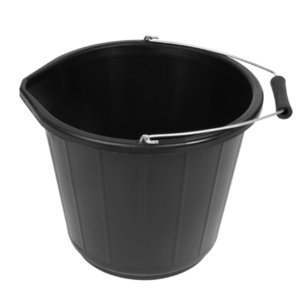
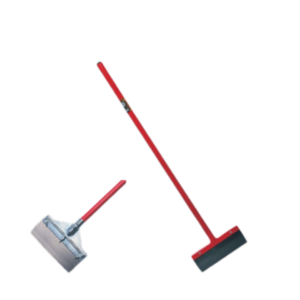
Lift the grate and look at what is inside. Silt, leaves and weeds are the usual finds. Clear what you can reach by hand, wearing orange nitrile gripper gloves, whose textured grip holds in wet conditions, and put it straight into a builder bucket until you can bag it. A floor scraper with handle takes caked silt off the paving around the grate.

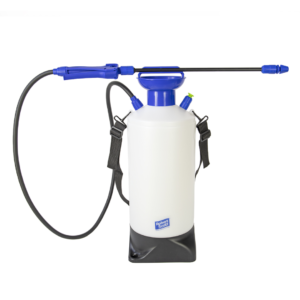
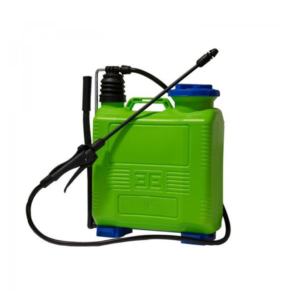
Then rinse the grate and the paving around it. A 10L Pow-R-Plus HD pressure sprayer with lance gives extra reach along the base of the wall, and a 16L backpack sprayer carries longer spraying spells on your back. Do this on a dry day when the temperature is above freezing, so the water you use does not turn to ice on the path. If water still stands in the gully after you have cleared the grate, the pot underneath is probably full and needs a drainage contractor.
Check the brackets and any sagging runs
We would note every sagging section and loose bracket, and leave the repair to a contractor. A run that dips holds water, and water in a channel is what freezes. Look for brackets pulling away from the fascia, a run that dips between supports and joints that have opened.
The Department for Communities note adds a point that is easy to miss: plastic gutters that are overloaded when a downpipe blocks may distort and not return to their original shape once the blockage is cleared, so a gutter that has been overloaded once may need re-fixing even after it has been cleared. The same note says plastic gutters are easily damaged by ladders, which is one more reason not to lean a ladder on the gutter.
Look at the outlets, hoppers and overflow pipes
We would not rely on a gutter guard to keep an outlet clear. Silt and leaves collect at the outlet, and a guard only helps while it is clear itself. Check that the grille on each outlet is in place and not packed with debris, and check any hopper or overflow pipe is open. Cadw recommends leaf guards at the top of rainwater outlets to help prevent downpipes blocking, and that advice works when the guard is checked at every visit.
On a building with a flat roof, a box gutter or a parapet, our advice is to have an overflow fitted wherever possible and to check the whole installation twice a year. The Department for Communities note says the same, adding that the overflow should be positioned so that if it discharges it will be noticed.
Keep a dated record
Photograph every problem, with the date, as you go. A set of dated pictures of an overflowing gutter above a doorway shows what was known and when, and it makes a quote, a service request or a conversation with a landlord far quicker. It is also what we do on our own visits, where the result is photographed after the gutter has been cleared and flushed.
HSE’s guidance on managing slip and trip risks tells employers to keep a record of all cleaning and maintenance work, and the Management of Health and Safety at Work Regulations 1999 require employers to assess risks, including slip risks, and act on them where necessary. A dated record is the simplest way to show you have done both.
Questions about frost and gutters
Why is there ice on my entrance below the gutter?
Often because the gutter above is overflowing, leaking at a joint or pulled away from the fascia. The water runs down the wall and across the path, and freezes there. Clear the gutter, check the joint, and look at the fall of the run. Treat the cause as well as the ice.
Can ice form when the forecast says the temperature will stay above freezing?
Yes. The Met Office explains that a ground frost, where a surface is below freezing, can happen without an air frost. Wet paving and the foot of a wall are the places to watch.
Should I clear gutters when it is freezing?
Wait for a dry day above freezing. Rinse water will freeze on the ground, and a gutter that is already full of ice is best left to a specialist.
Do gutter guards stop gutters freezing?
No. Guards on outlets reduce what gets through, but silt still builds up along the channel and the guard itself can clog. Check them at the same visits.
How often should gutters be checked?
Twice a year at minimum, which is also what the Department for Communities technical note advises, with flat and secret gutters checked more often in autumn.
Who is responsible for clearing gutters on a leased building?
It depends on the lease and the service charge. Read the repairing and maintenance clauses, and on a multi-let building ask in writing who clears the gutters and who pays. This is general guidance, not legal advice.