In this article 7 sections
A sack of dry leaves weighs a few kilos. After one night of rain the same sack can be too heavy to lift safely, the paving underneath is stained brown and the nearest gully is blocked. Clearing leaves in the last dry days before a wet spell costs a fraction of the same job a week later.
We clear car parks, entrances and estates across Liverpool and the North West every autumn. Below is how we time the work, which surfaces and drains we hit first, and the kit that makes the difference when the leaves are already wet.
The forecast sets the date
We plan leaf rounds from the five day forecast, not the calendar. When a long wet spell is coming, the hard surfaces get cleared on the last dry day before it. A day early is fine. A day late means the job changes character.
Dry leaves roll ahead of a wide broom and pack loosely into a sack. On open paving and car park aisles the 24″ Soft Sweeping Brush moves them in long passes with a 24 inch head, and it arrives with the handle fitted at £4.00 excl. VAT. That brush earns its place only while the leaves are dry. Once they are wet, soft bristles skate over the mat.
One clearance rarely holds. Wind brings a fresh drop within days, so sites with mature trees need a round every one to two weeks until the trees are bare. In the North West that is often late November or early December.
Rain turns sweeping into lifting
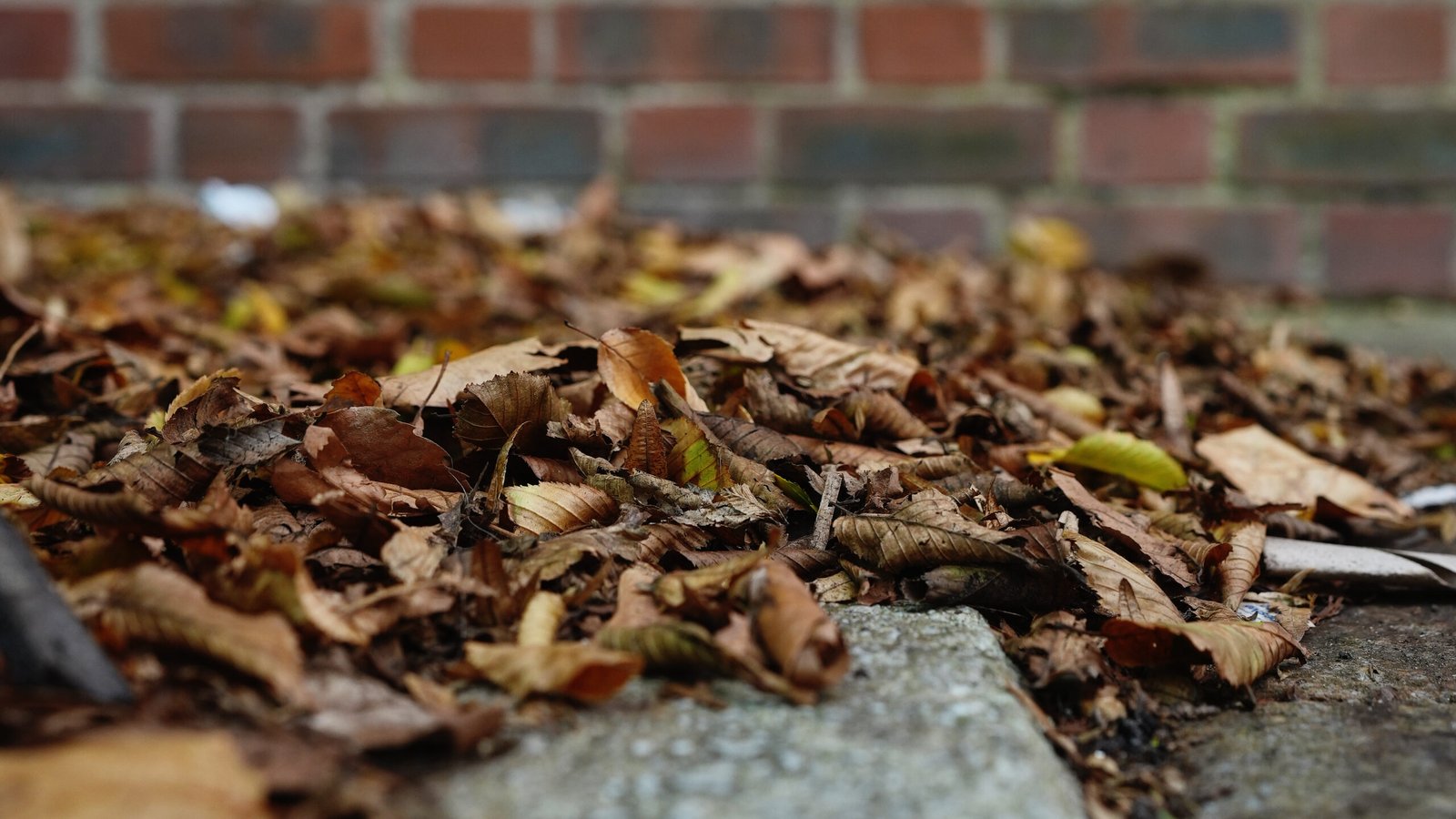
A wet leaf holds water, flattens and sticks to the surface. One pass of the broom becomes three. The sack fills to several times its dry weight.
HSE guideline figures for lifting close to the body at waist height are 25 kg for men and 16 kg for women. They drop when the load is held away from the body or lifted from the ground. A full sack of soaked leaves passes those figures without effort. We fill sacks to half when leaves are wet and tell the team why.
Thin bin bags split at that weight, usually at the first lift. Heavy duty rubble sacks take wet leaves and the twigs mixed through them without tearing. They come black, in a case of 100, at £12.61 excl. VAT. Black also hides the contents while full sacks wait for collection in public view.
Brown marks that a broom will not lift
Leaves release tannins as they break down. A wet mat left on light block paving, concrete flags or natural stone prints brown, leaf shaped stains into the surface. Oak, high in tannin, is among the worst. The longer the mat sits, the deeper the mark.
The stains fade over months of weather. An entrance that has to look right before then needs a pressure wash or a paving cleaner, which costs more than the sweep that would have prevented it. That is why light coloured paving at main doors goes first on our rounds.
If leaves are already stuck down, a soft broom only polishes them in. The 12″ Stiff Brush lifts a flattened mat off block paving and out of joints, kerb lines and step corners. Its full length handle keeps the operative upright through a long session. It costs £3.75 excl. VAT.
Gullies decide whether the car park floods
Leaves washed onto a gully grate knit into a mat that lets almost no water through. The water ponds across the car park or runs toward the lowest door. We clear a ring around every grate and lift the leaves sitting on it. Then we check grates again the morning after the first heavy rain, because leaves from roofs and verges arrive with the water.
If a gully still ponds once the grate is clear, the pot below is probably full of silt. That needs a jetting or gully emptying service, not a brush.
Pulling a wet mat off a grate in November is cold work. Waterproof Thermal Nitrile Gloves have a nitrile shell with a waterproof thermal lining, so hands stay warm and dry and grip holds on a wet sack neck. Sizes run Medium to XX Large, at £5.50 excl. VAT.
Working among cars in poor light
Car park clearance puts operatives between moving vehicles in the flat grey light of late autumn afternoons. Drivers looking for a space are not looking for a person bent over a gully. The orange Railspec Vest is light polyester that dries fast after rain. Sizes run Small to XX Large, enough to fit over winter layers, at £4.50 excl. VAT.
Where the leaves end up
Leaves from a business site are commercial waste. They cannot go in a household garden waste bin. Under the duty of care they go only to a registered waste carrier, and you keep the waste transfer note.
Composting them on the site where they fell avoids that cost. A wire or pallet bay in a back corner turns leaves into leaf mould in one to two years, ready to go back on the beds. Litter, dog waste and road sweepings stay out of it.
Grass and planted beds can wait until the end of the season. The exception is a thick mat smothering a lawn, which yellows the grass if left for weeks.
Book it before the forecast turns
On sites where leaf clearance is nobody’s job, it waits until a gully floods. Our grounds maintenance team covers Liverpool, Manchester, Chester, Wrexham and the surrounding areas. We add seasonal leaf clearance to a regular contract or book it as a one-off visit.