In this article 9 sections
In short
- Vacuum before any wet cleaning.
- Keep grit out of the entrance mat so it stays off the carpet.
- Lift the mat once a month and dry the floor underneath.
- On wet days pull the water out of the mat or swap it.
- Blot spills when they happen and treat stains after closing.
- Use a carpet product made for extraction and avoid overwetting.
- Book a deep clean for whole floors on a set cycle.
Rain, mud, grit and wet leaves come in on every pair of shoes, and the entrance mat and the first few metres of carpet behind it take all of it. This article covers how grit damages carpet, how to clean a ribbed entrance mat, what to do on a wet day, when vacuuming stops being enough and when to book a deep clean.
Impact is a family-run cleaning supplies and services business in Liverpool, trading since 2007 with more than 30 years of trade experience behind it. The routine below is the one we would set up for an office, shop, surgery, school, hotel, church or shared hallway. Most of it needs one person, a vacuum and fifteen minutes.
How grit damages carpet
Grit is sharp. Every step grinds the particles against the base of the carpet fibres and cuts them. After a few months this shows as a grey, flattened lane from the door to the reception desk or the stairs. Cut fibres do not recover, so the job is to take grit out before it is walked in deep.
Always vacuum before any wet cleaning. If a gritty carpet is shampooed or mopped first, the water turns the grit into mud and pushes it down into the pile.
The entrance mat is there to catch grit. Once it is full, the grit goes onto the carpet.
How often to vacuum the mat and the traffic lane
Vacuum the entrance mat and the traffic lane behind it once or twice a week, and again after a run of wet or gritted days. Go over each strip twice, in opposite directions, because a single pass leaves grit in the pile. On a ribbed mat finish with a pass along the ribs, where grit settles in the channels.
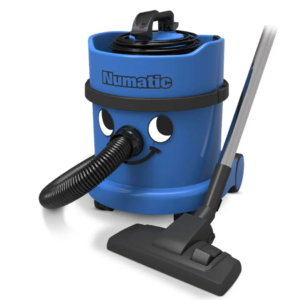
A commercial tub vacuum with a long cable, such as the Numatic PSP370, covers an entrance and a corridor from one socket.
Cleaning a ribbed entrance mat
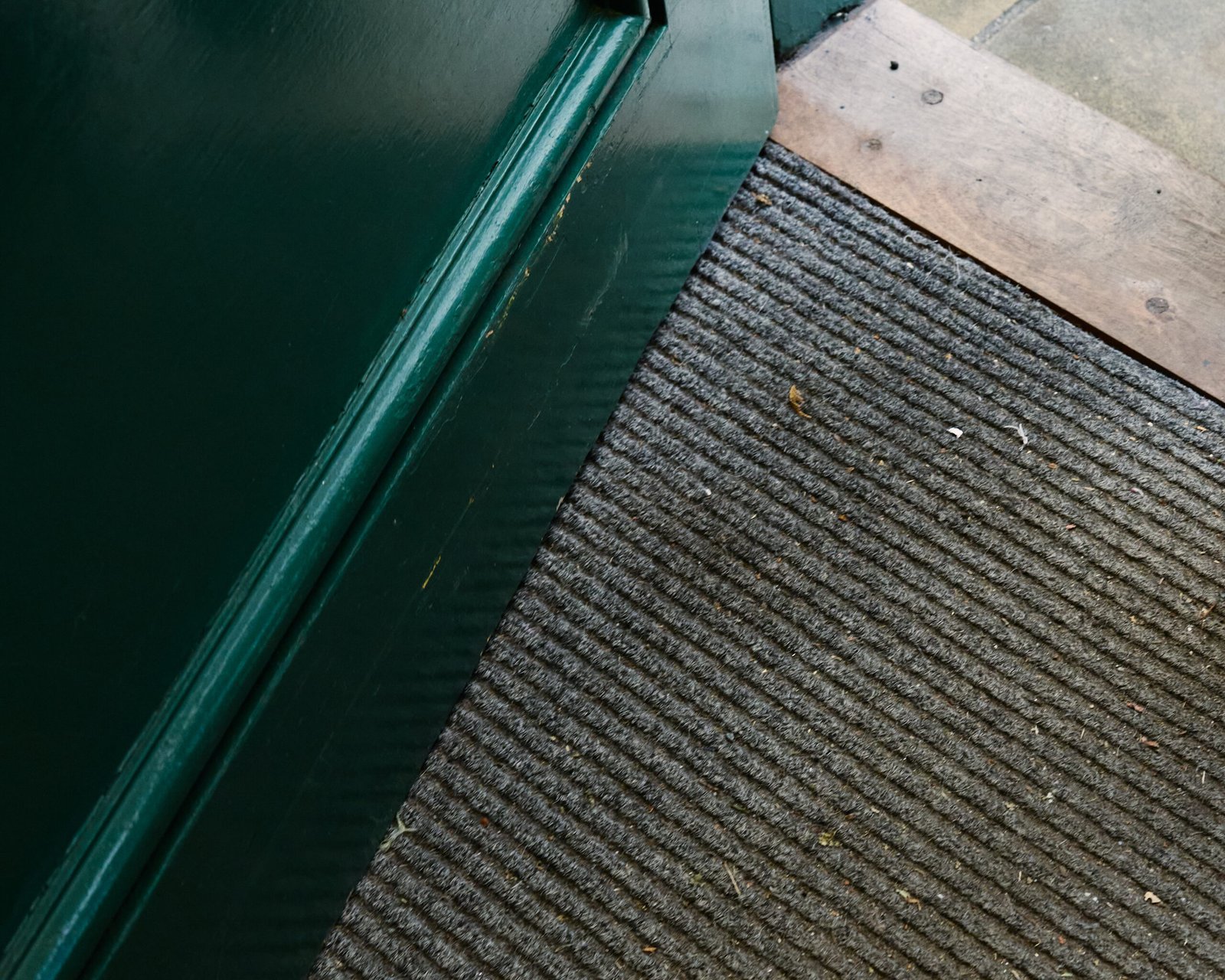
Most entrances use a ribbed barrier mat: a carpet face with ribs, on a rubber or vinyl backing. Vacuuming keeps the surface tidy, but once a month the mat needs lifting and cleaning properly.
- Lift the mat and take it outside. Grit and trapped water sit under the backing and mark the floor, and neither can be seen while the mat is down.
- Shake it, then lay it face down and knock the back. Grit packed into the ribs works loose from behind.
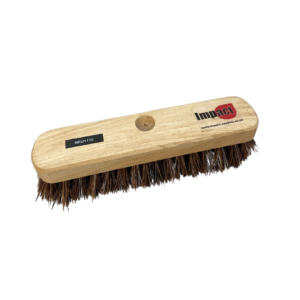
- Turn it over and brush along the ribs with a stiff brush. A 10 inch Stiff Deck Scrub on a handle reaches into the channels, where grit stays after shaking.
- Vacuum the mat and the floor where it sits. Loose grit left on the floor goes straight back onto the mat.
- If the face is stained, clean it with a carpet product at the dilution on the label and rinse well. Too strong a mix leaves residue that holds dirt. Let the mat dry flat, because a folded or rolled wet mat keeps its water and starts to smell.
- Put it back only when both the mat and the floor are dry. A damp mat on a damp floor stays wet and can mark the floor. Check the edges lie flat, because a curled edge is a trip hazard.
Check the manufacturer’s care instructions before using hot water, a pressure washer or a machine wash, as some backings crack or curl. If your mats are rented, the supplier swaps them on a set cycle and you only need to keep them vacuumed between visits.
What to do on a wet day
A saturated mat cannot take any more water, so every wet shoe carries it onto the floor behind.
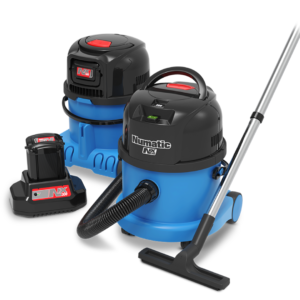
Pull the water out of the mat and the floor edge with a wet vacuum. A cordless one, such as the Numatic WBV370NX, leaves no cable across a doorway people are still using. If you have a spare mat, swap it in and dry the wet one flat indoors. Keep a wet floor sign out until the floor is dry.
When vacuuming stops being enough
When the traffic lane stays grey after a thorough vacuum, grease and shoe residue have bonded the soil to the fibres. That needs hot water extraction: a machine sprays cleaning solution into the carpet and pulls it straight back out with the dirt. Impact supplies Numatic extraction machines with the carpet chemicals to run them, and offers carpet and upholstery extraction as a commercial cleaning service.
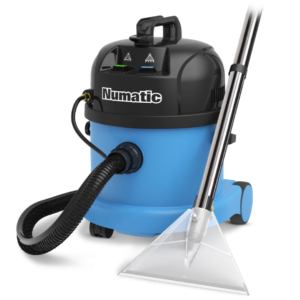
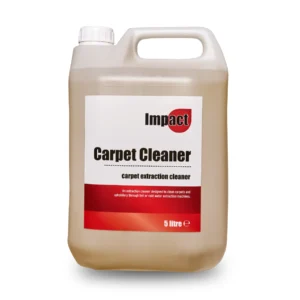
Small areas, entrance mats and spot stains suit a compact extractor such as the Numatic CT370, which is light enough for stairs and quick jobs. Use a carpet product made for extraction machines. Impact Carpet Cleaner is diluted 1:80 and controls foam in the recovery tank.
- Vacuum the area thoroughly.
- Test the solution on a hidden corner and check the colour does not move.
- Extract in short, overlapping passes and recover fully before moving on.
- Finish with one or two dry passes with the spray off to pull out the remaining water.
- Keep people off until it is dry, and open a window or run the heating to speed it up.
Warning: overwetting is the most common mistake. A carpet that stays damp for a day can shrink, brown at the tips and smell. Use as little water as the machine allows and finish with dry passes.
Spills and stains in a busy building
A spill cannot always be treated on the spot in a busy building. Blot up the liquid with a clean white cloth when you can, working from the outside of the stain towards the middle, and put a sign out. Never rub, because rubbing spreads the stain and frays the fibres.
Leave the stain treatment for after closing: vacuum, apply the product at the label dilution, extract and rinse. Use as little product as you can. Residue left in the pile is sticky and holds dirt, which is why an over-treated spot often comes back darker a few weeks later.
Damp mats and smells
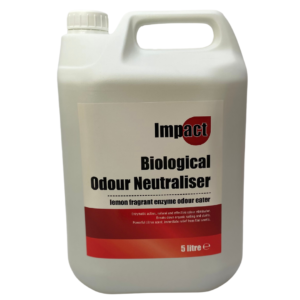
After a run of wet days an entrance mat often stays damp underneath, and a musty smell in the lobby is the first sign. Dry the mat and the floor under it first, because the smell comes from the damp. Once the source is dealt with, Impact Biological Odour Neutraliser treats what remains.
A routine for mats and carpets in wet weather
| Area | Routine |
|---|---|
| Entrance mat | Vacuum once or twice a week and after wet or gritted days. Lift, shake and brush once a month. |
| Floor under the mat | Check monthly for grit and trapped water. |
| Traffic lane | Vacuum on the site’s normal cleaning round. |
| Spills and stains | Blot at the time, treat after closing. |
| Traffic lane and mats | Extraction clean when the lane stays grey after vacuuming. |
| Whole carpeted areas | Deep clean on a set cycle, usually once or twice a year, set by how heavily the area is used. |
When to bring in a contractor
An in-house team can keep mats and entrances in good order with the routine above. Whole carpeted floors need larger machines and drying time planned around opening hours, which is what a set-cycle extraction clean covers. Impact’s commercial cleaning team covers carpet and upholstery extraction for sites in Liverpool and North Wales.