In this article 11 sections
- How to prepare a building entrance for winter on different sites
- 1. Leaves, drains and standing water
- 2. Entrance mats and wet floors
- 3. Ice and grit on ramps and steps
- 4. Weeds and moss in paving
- 5. Glass doors and shop windows
- 6. Handrails, door handles and push plates
- 7. Litter, bins and planting
- What to do in spring and summer
- Related kit from Impact
- Your next step
In November most building entrances start to look worse. Wet leaves, frost, rain and dark afternoons all add up. This checklist shows how to prepare a building entrance for winter, what to check, how often, and which tools make the job easier.
The same seven checks work for shops, offices, cafes, garages, schools, churches, halls, surgeries, flats and public buildings. Start outside, walk to the door the way a visitor would, and go through the list in order.
How to prepare a building entrance for winter on different sites
The checklist stays the same. The priorities change.
- Shops and restaurants. Clean glass and a clean doorway during opening hours.
- Offices. A dry reception area after rain.
- Garages. Oil marks and grit on the forecourt.
- Schools and halls. More litter after drop-off and events.
- Churches and community buildings. Empty for days, so leaves and weeds build up unnoticed.
- Surgeries. Door handles and rails wiped often.
- Flats. Shared bins and unclear responsibility for the area outside.
- Older and public buildings. Ramps, handrails and surfaces that need gentle products, not hard scrubbing.
1. Leaves, drains and standing water
Wet leaves collect in paving joints, on drain covers and right in front of the door. Water that cannot drain away either freezes or gets carried inside on shoes.
What to do:
- Sweep leaves off paths, steps and ramps before they flatten and stick.
- Clear drain covers and kerb edges after every storm or windy night.
- Busy sites every day in November. Quieter sites at least twice a week.
A layer of wet, flattened leaves can be as slippery as ice.
A wide soft broom and a lobby dustpan clear most of it quickly. Heavy duty sacks won’t split when filled with wet leaves.
2. Entrance mats and wet floors
A mat that is too small or already soaked won’t dry shoes. The floor inside gets wet and slippery.
HSE guidance for employers recommends stopping rainwater at the door, using suitable matting so people can dry their feet, and keeping floors clean and dry where reasonably practicable.
Shake, vacuum or swap mats before the morning rush. Check the edges, because a curled edge is a trip hazard. In heavy rain, add a second mat if the main one is soaked. Dry the floor inside instead of leaving it wet after mopping.
A mat that is fine at 8am can be soaked by lunchtime. On rainy days, check it more than once.
If you have no proper entrance matting yet, sort that before buying more cleaning products.
3. Ice and grit on ramps and steps
Ice forms first in three places.
- Shaded ramps
- North-facing steps
- Metal thresholds
Grit the main walking routes when frost is forecast, not after it arrives. Brown grit is easy to see, so you can check which areas are already treated. Keep a de-icer spray for small icy patches, for example near handrails. Put up wet floor signs inside until the floor is dry.
If ice melts during the day, it can freeze again in the evening. One morning check may not be enough.
Brown De-Icing Salt in a 10kg bag is easy to spread by hand or with a scoop. Prestone Rapid De-Icer is handy for small areas.
4. Weeds and moss in paving
Weeds grow from the joint, not from the paving block. Pull off only the top and the root stays. A few weeks later the weed is back.
Weeds and moss keep growing in damp joints over winter, especially in shaded spots. Dirt and seeds left there now mean more weeds in spring.
- Pull or scrape out weeds with their roots from joints and kerb edges.
- Sweep the joints clean.
- If your site allows weedkiller, use only products approved for hard surfaces and follow the label.
- If the joints have sunk, refill them with jointing sand. You can usually get it from a builders merchant.
A stiff brush works better than a soft broom for moss and packed dirt.
5. Glass doors and shop windows
In winter the sun is lower. Smears and marks on glass are easier to see.
Sweep first, then clean the glass, so grit doesn’t scratch it. Clean from top to bottom and wipe dry so no smears are left. On shops and reception areas, check the glass before opening and again after lunch.
A dirty cloth leaves streaks, so swap to a clean one often. Brite Glass Cleaner comes in a 750ml trigger bottle and works on glass and stainless steel, with a mildly acidic pH of 3 to 5. Use it with microfibre cloths and finish with a dry side of the cloth.
6. Handrails, door handles and push plates
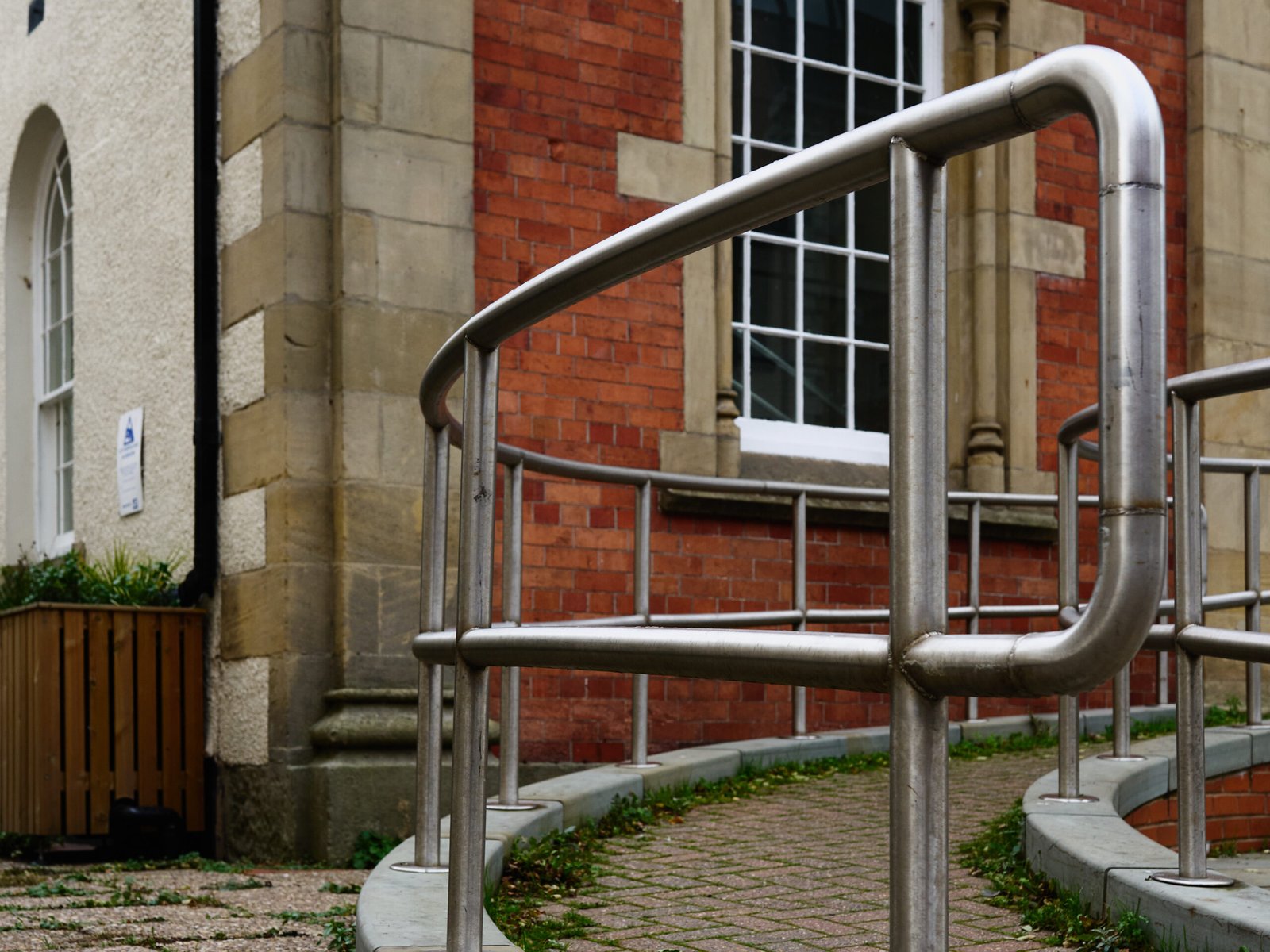
In cold weather more people hold the handrails. Salt and wet gloves leave marks.
Wipe handrails, door handles, intercoms and push plates at the same time as the glass.
Two things people often get wrong with stainless steel.
- Wiping across the grain. It leaves swirl marks. Wipe along the grain and dry it.
- Using bleach or strong acids. Over time they can damage the surface. A glass and stainless cleaner is the safer choice.
Colour-coded microfibre cloths keep outdoor cloths away from indoor surfaces. Nitrile gloves keep your hands clean when wiping dirty rails.
7. Litter, bins and planting
Overflowing bins make the whole entrance look neglected, even if the reception is spotless.
Most litter ends up in three places.
- The corner where the wind blows it
- Around the bins
- In the planting next to the door
Pick up litter before you sweep. Empty or change the bags in outdoor bins at the same time. Clear leaves and rubbish out of planters. Do it daily on busy sites and a few times a week on quieter ones.
A curved litter picker and a hoop that holds the sack open let one person clear these spots without bending all the time.
What to do in spring and summer
When winter is over, pull weeds before they seed. Clean the glass more often because of pollen and dust. Deep clean paving that has gone dull from grit. Moss likes damp, shaded edges, so keep sweeping those joints.
Related kit from Impact
- Brite Glass Cleaner 750ml for glass doors and stainless steel handrails. pH 3 to 5, ready-to-use trigger bottle.
- Microfibre Cloths, pack of 10, in red, blue, green and yellow for different areas.
- 24 inch Soft Sweeping Brush with handle for wide paths and entrances.
- 12 inch Stiff Brush with handle for paving joints and rough surfaces.
- Lobby Dust Pan and Brush for quick pickups by the door.
- Litter Picker MAX Curved for picking litter without bending.
- Litter Picking Hoop to hold sacks open when working alone.
- Heavy duty black rubble sacks, case of 100, for wet leaves and outdoor waste.
- Black nitrile powder-free gloves for cleaning and handling dirty items.
- Brown De-Icing Salt 10kg for paths and entrances.
- Prestone Rapid De-Icer for small icy patches.
Not sure what you need for your entrance? Ask at our Liverpool trade counter.
Your next step
Go through these seven checks this week. Then keep up the daily cleaning and check again after storms and frosty nights. That is the simplest way to prepare a building entrance for winter and keep it safe for visitors, staff and deliveries.