
In this article 8 sections
- What should you check first?
- How to remove graffiti
- Why use a specialist graffiti remover?
- Which surfaces need the most care? (surfaces and what to consider)
- When a ready to use spray makes sense
- What usually goes wrong?
- Why dealing with graffiti quickly helps
- Graffiti happens fast. Removing it should too.
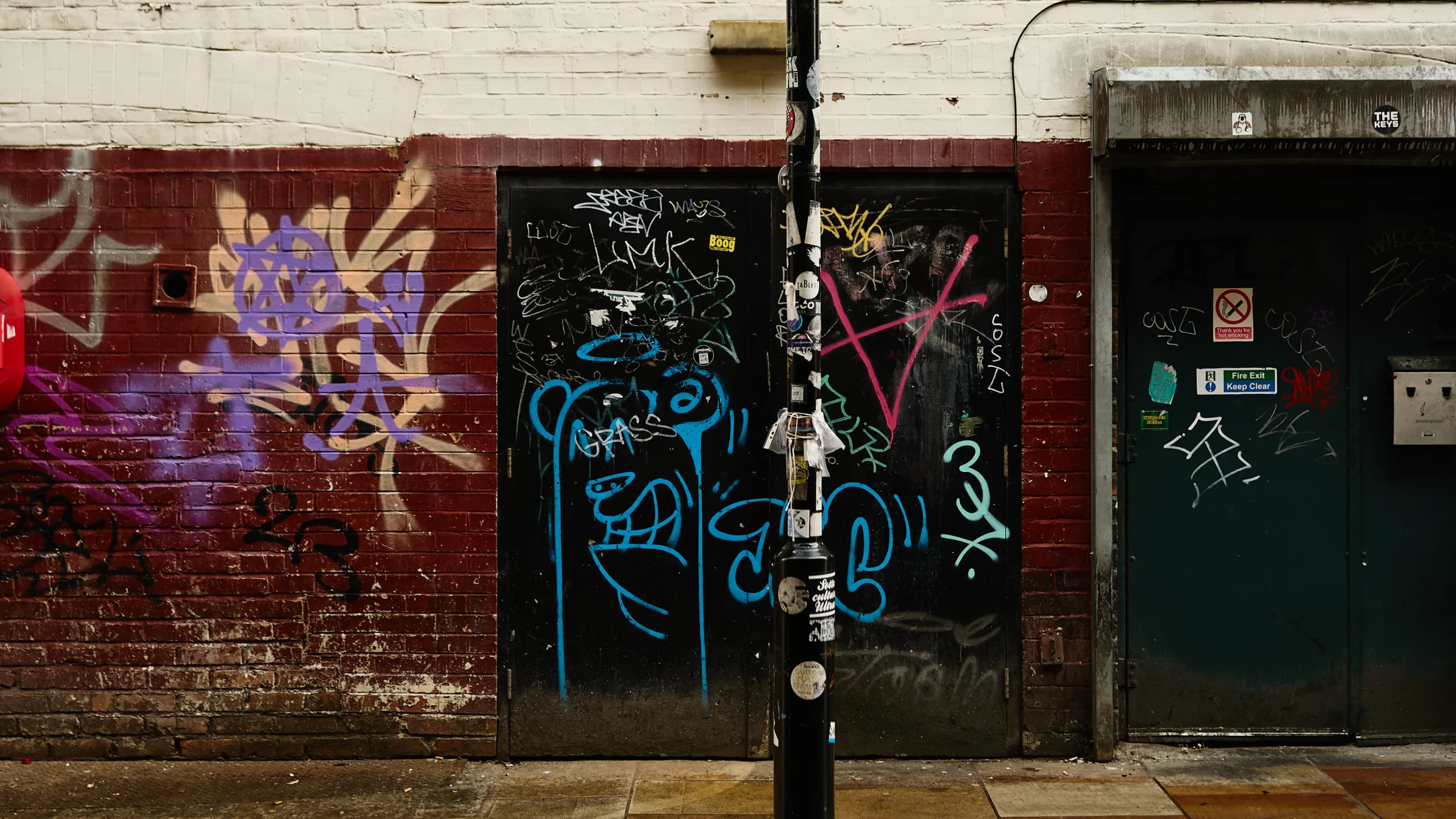
Graffiti can take seconds to apply and considerably longer to remove, especially if the wrong cleaner is used. The quickest way to deal with it is not necessarily harder scrubbing or a stronger chemical. It is choosing a graffiti remover that suits the mark and, just as importantly, the surface underneath it.
Spray paint on brickwork is a different job from permanent marker on a coated door. Before starting, identify what has been marked, check the surface and use a product designed for graffiti rather than relying on an everyday cleaner.
What should you check first?
Start with the surface.
Painted metal, plastic, brick, stone and concrete do not respond in the same way to cleaning chemicals. On a smooth surface, the graffiti may sit largely on top. On porous brick or concrete, paint can penetrate into the material and leave staining even after the visible layer has been removed.
Painted and coated surfaces need particular care. A remover may successfully dissolve the graffiti but also soften or affect the original finish if the product is not suitable.
If you are unsure, test a small area before treating the whole mark.
How to remove graffiti
A sensible process keeps the job controlled and reduces the risk of damaging the surface.
- Identify the surface and the mark. Check whether you are dealing with spray paint, permanent marker, paint pen or another material, and whether the surface is painted, coated, porous or smooth.
- Check the product instructions. Read the label and relevant safety information before use. Follow the stated application method, contact time and PPE requirements.
- Test where necessary. Use a small, less visible area first, particularly on painted, plastic or coated surfaces.
- Apply the remover to the graffiti. Treat the affected area rather than unnecessarily covering the surrounding surface.
- Let the product work. Do not immediately compensate with harder scrubbing. Give the remover the contact time specified by the manufacturer.
- Remove the loosened paint or ink. Wipe, agitate or rinse according to the product instructions and the surface being cleaned.
- Check before repeating. Persistent graffiti may need another treatment. Inspect the original surface before applying more product or increasing abrasion.
The aim is straightforward: remove the unwanted mark without creating another maintenance job underneath it.
Why use a specialist graffiti remover?
General purpose cleaners are made for everyday cleaning. Graffiti is designed to stay in place.
Spray paints, permanent inks and paint pens can bond strongly to a surface, which is why repeatedly attacking them with routine cleaning chemicals often produces poor results. More scrubbing also increases the chance of scratching or dulling the material underneath.
A specialist graffiti remover is formulated for this type of contamination. That can make removal quicker and reduce the amount of unnecessary mechanical work.
Impact supplies dedicated products for graffiti removal, including Graffiti Remover 750ml and Impact Power Graffiti Remover.
Which surfaces need the most care? (surfaces and what to consider)
Painted doors and shutters – The remover must not damage or soften the original paint finish. Test first if compatibility is uncertain.
Plastic and coated panels – Smooth surfaces can be easier to treat, but some plastics and coatings are sensitive to solvents.
Brick and concrete -Paint can enter pores in the material, so staining may remain below the surface.
Stone – The type and condition of the stone matter. Older or previously treated surfaces may need a more cautious approach.
Signs and external fixtures – Check both the main material and any printed, painted or coated finish before applying cleaner.
This is why a universal „spray it and scrub it” method is a poor approach to graffiti removal.
When a ready to use spray makes sense
Graffiti is not always spread across an entire wall. A marker on a door, a small tag on a shutter or spray paint on a panel may only need local treatment.
For jobs like these, Graffiti Remover 750ml offers a convenient ready-to-use format that can be applied directly to the affected area. It is also easy to keep alongside other specialist cleaning products, so the team does not have to start searching for a suitable chemical after graffiti appears.
Impact Power Graffiti Remover is also available within the Impact range. If the surface or type of graffiti makes product selection less obvious, the Impact team can advise on the most appropriate option before treatment starts.
What usually goes wrong?
Using too much force is one of the quickest ways to turn graffiti removal into surface damage.
If the mark does not disappear immediately, harder scrubbing is not automatically the answer. Abrasive action can scratch plastics, dull coatings and remove existing paint.
The same applies to stronger chemicals. A product that removes graffiti rapidly is only useful if the substrate survives the process.
Another shortcut to avoid is mixing cleaning products. Use graffiti-removal chemicals according to their instructions rather than combining them in an attempt to increase performance.
Why dealing with graffiti quickly helps
Fresh graffiti is also easier to manage when the right product is already available.
Keeping a dedicated remover with site cleaning supplies avoids the usual trial-and-error approach of testing whichever chemicals happen to be in the cupboard. The person dealing with the problem already has a product intended for the job and a clear process to follow.
That is useful whether the graffiti appears on a shop shutter, school wall, warehouse door, residential block, public space or external fixture. The principle does not change with the location.
Graffiti happens fast. Removing it should too.
Good graffiti removal is mostly about making the right decisions before cleaning starts. Check the surface, choose a suitable product, follow the instructions and give the chemical time to work before increasing force.
Impact supplies specialist graffiti-removal products including Graffiti Remover 750ml and Impact Power Graffiti Remover, alongside a wider range of professional cleaning chemicals.
If you are unsure what to use, send the Impact team a photo of the graffiti and the affected surface. It is much easier to choose the right approach before treatment than to repair a damaged finish afterwards.