
In this article 4 sections
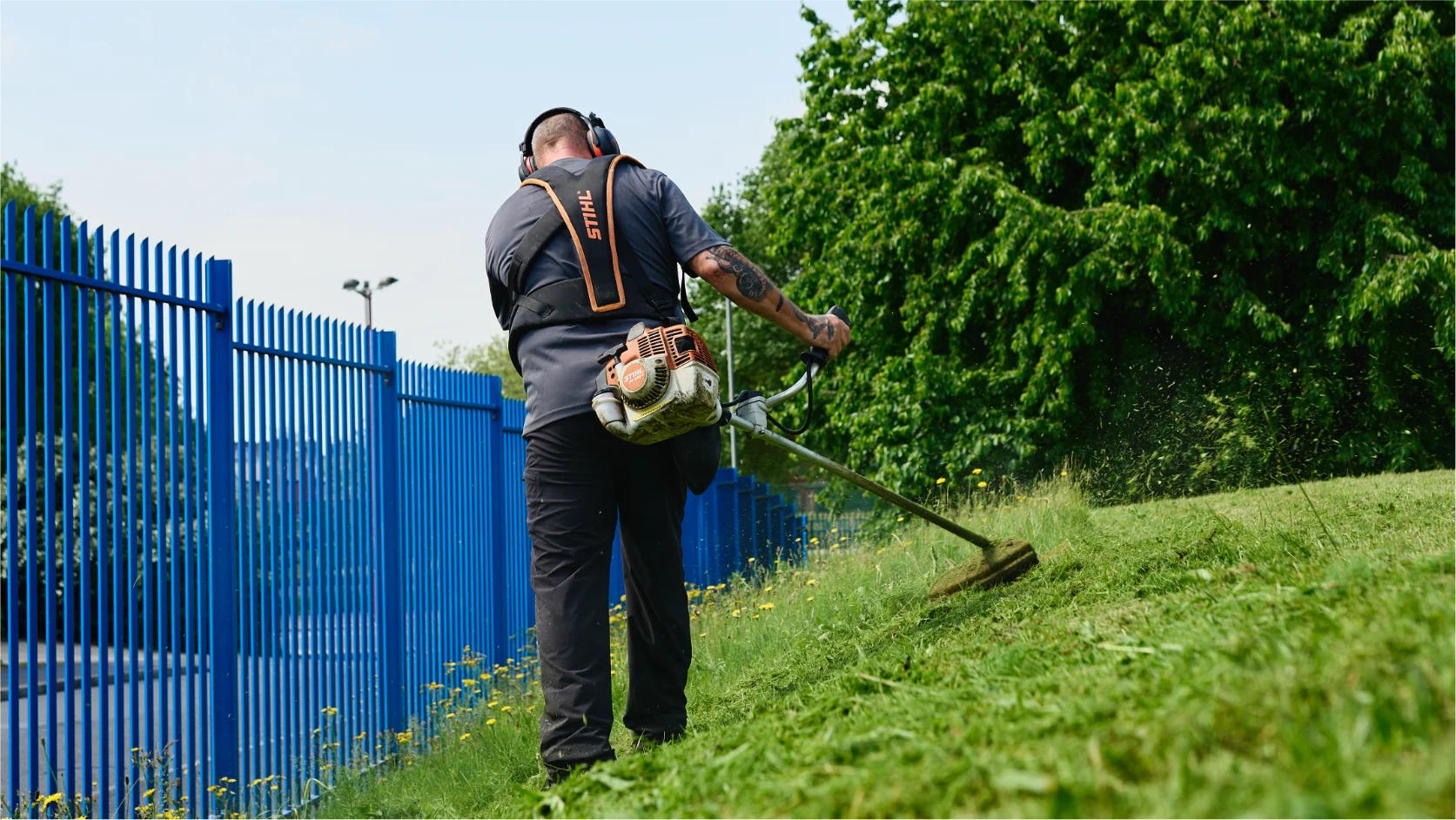
June sits in the middle of the UK’s main growing season, and on commercial grounds that shows fast. A car park edge, pathway or loading bay that looked clear two weeks ago can be overgrown again before the next scheduled visit, not because of a missed job, but because growth through this stretch of the year doesn’t slow down.
For offices, schools, retail parks, industrial sites and public buildings, this is one of the months when grounds maintenance schedules get tested the most.
Where June sits in the growing season
The UK growing season runs from March to October. Growth picks up through April and May as temperatures rise, and stays fast through June, the period when mowing intervals commonly shorten from fortnightly to weekly. Outside this window, particularly November to February, grass growth slows close to a stop and mowing is rarely needed at all.
That means the same site can need weekly attention in June and barely any in January. A schedule built around one fixed frequency all year either over-services the quiet months or under-services the busy ones.
Where it shows first
Fast growth doesn’t appear evenly across a site. It tends to show first in the same places:
- Car park edges and verges
- Pathways and pedestrian routes
- Loading bays and service yards
- Fence lines and boundary strips
- Around signage and entrances
These are also the areas most visible to staff, visitors and passers-by, which is part of why they matter for first impressions as well as access.
What a June-ready schedule looks like
Industry guidance for the growing season generally points to a fortnightly cut as a baseline from spring, moving to weekly from June through August for sites that need to stay consistently tidy. Cutting standards also matter: grass shouldn’t lose more than around a third of its length in a single cut, since cutting it too short too fast can stress the lawn, especially in dry spells.
For weeds along hard surfaces and verges, the same logic applies. A gap of two or three weeks during peak season is often enough for growth to re-establish, which is why these areas tend to need checking on every visit rather than as a separate job.
What this means for site managers
None of this requires a different approach to grounds maintenance, just a schedule that matches the season. A maintenance programme set up in spring with fortnightly visits may need to tighten to weekly through June, then ease off again later in the year.
If a site’s current schedule hasn’t changed since it was first set up, June is a reasonable point to check whether it still matches what’s actually growing.